
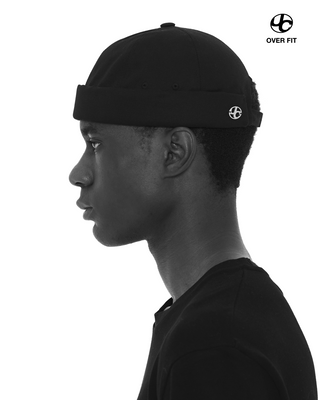

When choosing headwear online, many people look at only one number first: circumference.
Will it fit around my head?
Will it feel too tight?
Will there be enough room?
These are important questions, but headwear fit is not decided by circumference alone. The way a cap feels and looks is shaped by several measurements working together — height, visor length, inner circumference, and the overall proportion of the silhouette.
The UNDERCONTROL OVER FIT line is a good way to understand this. It is not simply about making headwear larger. It is about adjusting the measurements so each shape sits with balance.
Measurements Are More Than Numbers
A size chart can look simple at first.
Height.
Visor length.
Inner circumference.
But each number changes how the headwear sits on the head and how it appears from the front, side, and back.
A higher crown can create more depth. A longer visor can change the balance around the face. A wider circumference can offer more room, but it still needs to work with the shape of the cap.
That is why two caps with similar measurements can feel completely different when worn.
Start with Inner Circumference

Inner circumference is usually the first measurement people check. It tells you the general size range around the head.
For example, an OVER FIT cap may cover a wider range such as 59–64cm, 60–65cm, or even 64–66cm depending on the style.
But circumference should not be read as the entire fit. A larger circumference does not automatically mean a better silhouette, and a smaller range does not always mean a tighter visual impression.
The structure of the headwear changes how that number is experienced.
Height: How Deep the Cap Sits

Height is one of the most important measurements in headwear, but it is often overlooked.
A taller height can make the cap feel deeper and create more room above the head. A lower height can make the silhouette feel calmer, flatter, or closer to the head.
In the OVER FIT line, height is not used in the same way for every category. A brimless cap with a 14cm height creates a direct crown shape without a visor. A ball cap with a 14cm height creates depth together with the front visor. A bucket hat with a 10cm height uses its downward brim to build a softer outline around the face.
The number matters, but the category changes how the number works.
Visor Length: More Than Sun Protection

Visor length is often understood only as a practical detail, but it also affects the visual balance of a cap.
A longer visor extends the line in front of the face. A shorter visor keeps the silhouette lower and more compact. A bucket brim spreads around the head instead of pointing forward like a classic cap.
In actual OVER FIT examples, a ball cap may use an 8cm visor, while a bucket hat uses a 6cm brim and a hunting cap uses a shorter 5cm visor.
These differences are small in centimeters, but they change the impression clearly when worn.
Why One Number Is Not Enough

A cap with a wide circumference can still look unbalanced if the crown is too low. A cap with a deep crown can feel too heavy if the visor does not match the proportion. A short visor can feel refined on one shape, but too small on another.
This is why headwear measurements should be read together, not separately.
The fit is created by the relationship between the numbers.
Height gives depth.
Visor length shapes the front line.
Inner circumference creates the size range.
The silhouette brings everything together.
Real Examples from OVER FIT

Looking at different OVER FIT categories makes the measurements easier to understand.
- OVER FIT Brimless Cap: Height 14cm / Inner circumference 60–65cm
- OVER FIT Bucket Hat: Height 10cm / Visor length 6cm / Inner circumference 60–62cm
- OVER FIT Hunting Cap: Height 11–12cm / Visor length 5cm / Inner circumference 64–66cm
- OVER FIT Ball Cap: Height 14cm / Visor length 8cm / Inner circumference 59–64cm
Each style sits in a similar oversized direction, but the measurements do not work in the same way.
The brimless cap depends more on crown height and circumference because there is no visor. The bucket hat uses a lower height with a brim that wraps around the head. The hunting cap creates a lower and calmer profile with a shorter visor. The ball cap uses both height and visor length to create a deeper, more familiar cap silhouette.
What OVER FIT Really Means
OVER FIT is often understood as a larger size, but that is only part of the idea.
If only the circumference becomes larger, a cap can lose balance. It may feel roomy, but the shape can look flat, wide, or disconnected from the rest of the outfit.
For UNDERCONTROL, OVER FIT is closer to a redesign of proportion. The height, visor, circumference, and side profile all need to work together so the cap feels intentional when worn.
This is why OVER FIT should not be read only as “bigger.” It is better understood as a fit built through adjusted measurements.
Read the Side Profile

The side profile is one of the easiest ways to understand headwear measurements visually.
From the side, you can see how deep the crown sits, how far the visor extends, how much volume appears above the head, and whether the overall shape feels balanced.
A measurement chart gives the numbers. A side view shows how those numbers become a silhouette.
When reading headwear specs, it helps to look at both together.
A Better Way to Choose Headwear

Choosing headwear becomes easier when the measurements are understood as part of the design.
Do not look only at whether the inner circumference fits. Look at how high the crown is, how long the visor is, and how the shape appears when worn.
For OVER FIT, this is especially important. The line is not defined by one large number, but by the way multiple measurements create a more balanced oversized silhouette.
A cap is not only measured in centimeters.
It is measured in depth.
In proportion.
In how naturally it sits on the head.
That is how the numbers become fit.
Follow us on Instagram: Undercontrol Official Instagram
Join the Undercontrol Affiliate: Join Us Here